

You don’t always know what you’re getting into in the early stages of a relationship. Some people mask their problematic personality traits so well that years later, they seem like completely different people. On top of this, they might manipulate and gaslight you into thinking that you’re the one with the issue, and that they are persevering with you.
The good news is that you are not going crazy, and this is a common tactic of narcissistic people. The difficult news is that it takes practice to recognize the key traits of a narcissistic partner, and the work has only just begun once you’ve correctly identified them.
The Undercover Boss
It can be hard to truly know the person we have connected our lives to. This is truer of narcissists than it is of other personality types. One of the reasons people struggle to identify narcissism is that narcissists are so good at making themselves likable to everyone else, only for the mask to slip when you are alone with them.
 Every narcissist has an uncontrollable desire to be liked, loved, and centered. This differs from people-pleasers who will ingratiate themselves, give up their power, and diminish their boundaries to gain acceptance. By contrast, narcissists want the power, notoriety, and attention because they believe they are entitled to it.
This type of narcissism is called grandiose narcissism, or overt narcissism. People with this personality type are often in positions of power, such as being the heads of corporations, leaders at the top, or bosses lording it over underlings.
Overt narcissists are self-centered, emotionally underdeveloped, entitled people who are triggered by criticism but thrive on praise. Many of them know that these qualities are not palatable, and that they will “catch more flies with honey than with vinegar,” as the old saying goes. For this reason, they are also expert manipulators.
Whether it is a team of workers or a romantic partner, overt narcissists know how to mask their unsavory characteristics and magnify their positives. They will use their magnetism and communication skills to win people’s loyalty until they are surrounded by people who are captivated by them.
Unfortunately, the ruse only lasts until they meet disagreement, challenge, or someone who rivals their charm. At their core, overt narcissists lack empathy and will do anything to stay on top. They can effortlessly switch from being charismatic and charming to being cold, cruel, and calculating.
The same tongue that charms people into submission also cuts, shames, and threatens. The switch-up can be sudden and shocking, and leave you wondering who this person is, even though you thought you knew them.
Hidden Dragon
 The second flavor of narcissism is the vulnerable narcissist, or the covert narcissist. Unlike their counterparts, covert narcissists tend to appear anxious, introverted, shy, and even fragile. The primary trait of an overt narcissist is that they demand loyalty. By contrast, the core trait of covert narcissists is that they fear rejection. They are as manipulative and controlling of their partners, but they tend to use guilt, shame, and gaslighting to gain the advantage.
What makes covert narcissists so obviously fragile is their low self-esteem and hypersensitivity. Not only do they constantly crave validation and admiration, but they also react strongly to perceived criticism and imagined slights.
They are emotionally volatile people who will frequently take on the persona of victimhood if it means that they can avoid criticism, blame, or accountability. What solidifies their status as a narcissist is that they lack empathy for others and insist on centering themselves in everything.
Covert narcissists are not unlike the many types of predatory animals that camouflage themselves to avoid detection. Overt narcissists thrive on being the center of everyone’s attention, and to an extent, don’t care how people see them so long as they are being seen and heard.
On the other hand, covert narcissists tend to focus all of their manipulation tactics on one or a few people, ensuring at any cost that they are kept central and important to those selected few. They learn how to most effectively ensnare these people with delicate emotional manipulation and careful posturing. Lacking empathy means that they don’t truly care for those who are closest to them, provided that they don’t hold them accountable or walk out on them.
The Key Traits of Narcissistic Partners
Being in a relationship with a narcissist is different from working for one or being a peer with one. It’s not always so simple to leave the relationship, and confronting them with their toxicity will often result in them becoming volatile and turning it around on you.
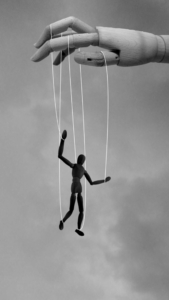 Before you even consider what to do about the situation, however, you will benefit from decisively identifying your partner as a narcissist, whether they are overt or covert. Months and years of gaslighting are only ended by the truth, and in this case, the truth truly will set you free.
Overt narcissists see themselves as superior, and in their minds, they are the head and leader of the relationship. They require your submission, recognition, and appreciation. If this status quo is challenged or questioned, they will reassert their dominance, sometimes in volatile and even violent ways.
For this reason, they tend to pick their partners carefully, choosing submissive people who will be content to follow and obey the rule of law in the relationship. Many of them use their intelligence and personal insight to manipulate their partners into agreement, ensuring the continuation of a relationship that only serves them.
It is relatively simple to identify an overt narcissist in a relationship; however, years of emotional manipulation and domination might obscure the facts. Any kind of power imbalance in a romantic relationship or platonic friendship should be a red flag. Giving someone power over you is a way of saying that you are less valuable than they are, which is never the truth.
Confrontations and disagreements happen in any relationship, and they can be necessary and helpful. However, if you reflect on all the fights you’ve had and realize that you are the one in the wrong, and your partner is always blameless, you might be in a relationship with a covert narcissist.
Covert narcissists are highly sensitive to criticism, correction, and even feedback. They might be more subtle in the way they dominate the relationship, but they tend to have complete control of the narrative. In their narrative, they are always blameless and always the victim of your wrongdoing.
You may have been gaslit into thinking that you need to keep them in your life because they love you despite your many flaws. However, ask yourself this: If you are constantly in the wrong and you have caused so much emotional damage to your partner, then why are they still with you?
No one can love someone who constantly hurts them. The more logical explanation is that they need you to believe their version of the truth, which always centers on their needs and preferences.
Freedom And Scars
 Being in a relationship with a narcissistic partner has likely made you feel small, insignificant, and as if you are a collection of problems. Depending on how long and involved the relationship was, you have likely sustained a fair amount of emotional and psychological damage. It might take some time and work, but you can find truth, freedom, and healing.
When a person breaks a limb, they might carry a scar for the rest of their life. Even when the fracture heals, they are left with a scar as a reminder of the experience. A similar thing happens when we are emotionally traumatized in a relationship. We may carry painful memories for years, but eventually, all that will remain is a painless scar as a reminder of that experience. You are not trapped. Freedom lies on the other side, just beyond your reach right now.
Find Freedom with Support
Sometimes we need a little extra help to get through things. If step one is identifying your partner as a narcissistic abuser, perhaps step two could be meeting with a counselor to discover your next step. If you would like to meet with a counselor, please contact us, and we can connect you with one.
Photos:
“The Man Behind the Mask”, Courtesy of Sander Sammy, Unsplash.com, CC0 License; “Barrier”, Courtesy of Eric Ward, Unsplash.com, CC0 License; “Puppet”, Courtesy of Sivani B, Unsplash.com, CC0 License; “Victory”, Courtesy of Miguel Bruna, Unsplash.com, CC0 License